
How to Find Rutherford County Court Dockets
There are two main ways to check a docket. You can search a single case in the free online portal, or you can open the calendar a court posts for a given day or term. The online case search at the Rutherford County Online Court Records System pulls docket events for a case once you find it. The court calendars list many cases set for a date.
Pick the path that fits your need. To track one case, search by name or case number. To see a full day's schedule, open the calendar for the right court.
- Open the online portal and search by party name or case number.
- Pick the court office: Circuit Court, General Sessions, or Clerk and Master.
- Open the case to view its docket events and hearing dates.
- For a full term schedule, open the court's calendar page instead.
- Confirm any date with the clerk before you rely on it.
The county posts a Circuit Court calendar for court dates and term schedules.
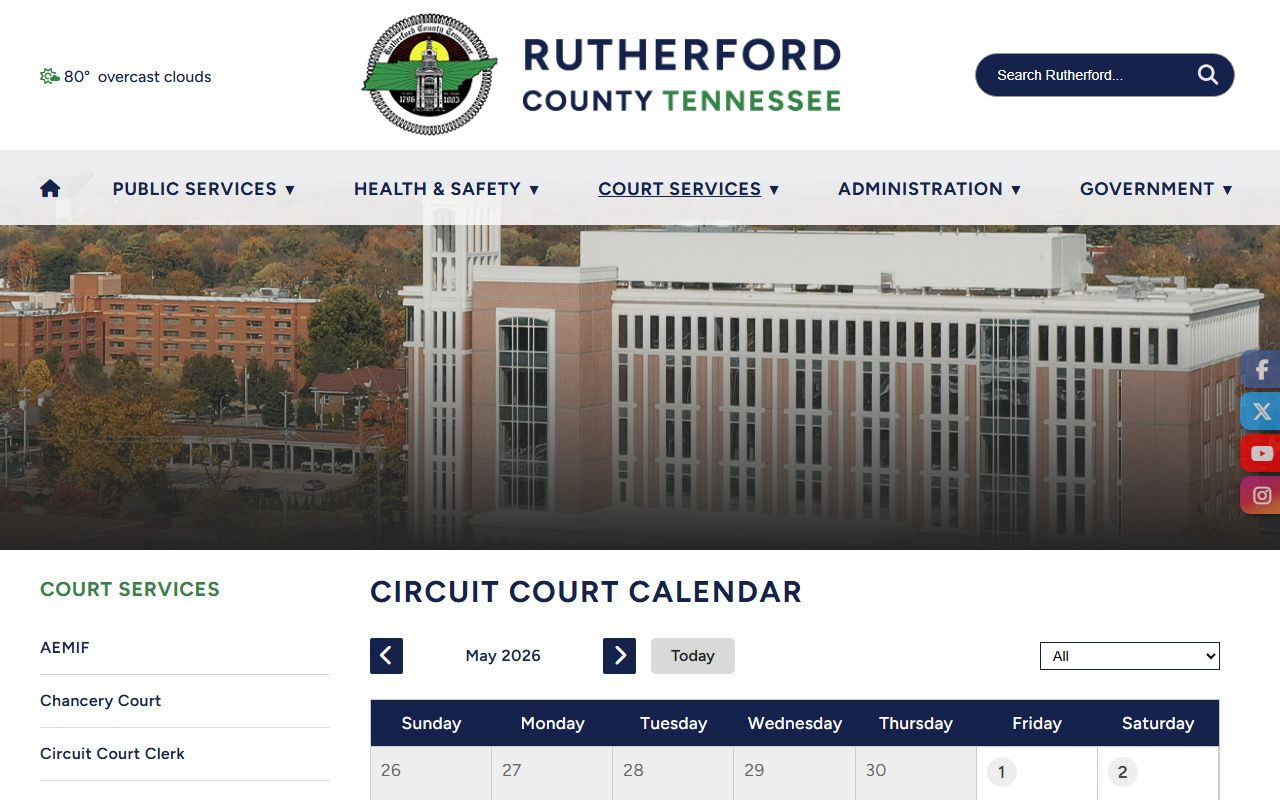
Calendars can change. Cases get continued, added, or moved between courtrooms, so always confirm before you appear.
What a Rutherford County Court Docket Shows
A docket entry is short by design. It records what happened and when, not the full text of each filing. Most dockets share a common set of fields. The exact layout differs a little between Circuit Court, Chancery, and General Sessions, but the core data is steady.
| Docket Field | What It Shows |
|---|---|
| Hearing Date | The date a case is set for court. |
| Time | The scheduled time for the hearing or call. |
| Case Number | The case identifier tied to the docket entry. |
| Case Style | The party names, such as State versus a defendant. |
| Event Type | Arraignment, motion, trial, review, or status. |
| Courtroom / Judge | The room and the judge or chancellor assigned. |
Some dockets also list attorney names. A docket does not usually include the full motion text, exhibits, or the judge's written order. For those, you pull the case file from the clerk.
Reading a docket takes a little practice. Event labels are short and sometimes use abbreviations. A line might note a motion set for hearing, a continuance, a plea, or a final judgment. When an entry is unclear, the clerk's office can explain what a code means, even though staff cannot tell you what it means for your case. Each new event is added in order, so the docket reads as a running timeline from the first filing to the last order.
Sorting and Filtering Online Docket Results
The online portal does more than list cases. Once results load, you can click a column header to sort, and you can type in a filter box to narrow the rows you see. The first click on a header sorts up, and the second click sorts down. This helps when a common name returns many cases.
The filter box is literal. It matches the exact text shown in the result table, such as a year, a case-number fragment, or a court label. It does not use typo tolerance or phrase search the way the main search does. The full search returns up to 2,500 rows, so a broad name search may need a case year or a court office to trim it down.
- Click a column header once to sort up, twice to sort down.
- Type a literal term in the filter box to hide rows that do not match.
- Add a case year or court office to a broad name search.
- Open a single case to see its full docket history.
Circuit Court Calendar in Rutherford County
Circuit Court is the broad trial court for the county. Its calendar covers civil and criminal matters and appeals from lower courts. The county's Circuit Court calendar page is the official place to check term schedules and court dates. Because Circuit Civil and Circuit Criminal run on different tracks, confirm which division your case sits in.
The Circuit Court Clerk keeps the records behind these dockets. Circuit Civil questions go to (615) 898-7820, and Circuit Criminal questions go to (615) 898-7812. The clerk can tell you the court date and procedural status, but the clerk cannot give legal advice or tell you what to file.
Term schedules group cases into blocks of court time. A criminal term may set many arraignments on one morning, while a civil term may set motions and trials across several days. If you are unsure when your case is set, search it in the online portal first, then confirm the date with the clerk. Court dates posted weeks ahead can shift, especially when a case is continued or a courtroom changes.
Chancery and General Sessions Dockets
Chancery Court is the equity court, and it posts its own dockets for divorce, probate-related matters, and other equity cases. General Sessions handles small claims, landlord-tenant disputes, and many misdemeanor and preliminary criminal matters, and it keeps separate civil and criminal calendars.
The Chancery Court dockets page lists hearing calendars for the Clerk and Master's docket.
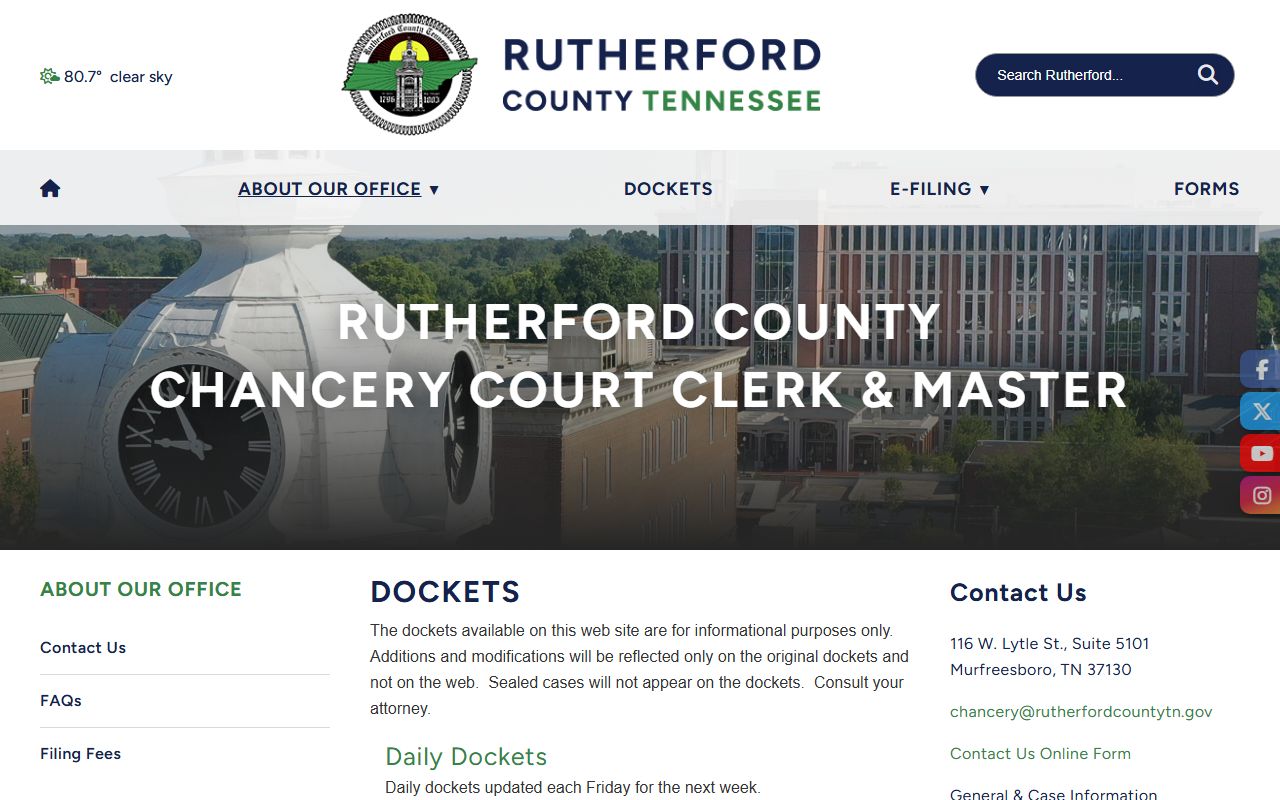
Because these courts run separate dockets, the same person can have entries in more than one place. A divorce in Chancery and a small-claims case in General Sessions show up on different calendars. The court-office filter in the online portal helps you keep them straight.
General Sessions Civil and General Sessions Criminal also run as two tracks. Civil covers landlord-tenant detainer warrants, small claims, and other money disputes. Criminal covers misdemeanors and the early stages of felony cases before they move up to Circuit Criminal. Each track has its own clerk line, so call the division that matches your case. General Sessions Civil is (615) 217-0069, and General Sessions Criminal is (615) 898-7831.
Common Hearing Types on a Rutherford County Docket
Docket entries name the kind of court event that is set. Knowing the labels helps you read your own case. A few show up again and again across the county's courts.
- Arraignment - the first criminal appearance where charges are read.
- Motion hearing - the court hears a request to decide an issue.
- Status or review - a check-in on the progress of a case.
- Trial - the full hearing of the case on its merits.
- Settlement or final - the date a case is resolved or a decree entered.
If your docket shows a setting you do not understand, do not guess. Call the clerk to confirm the date and the courtroom, and talk with an attorney about what the event means for you. The clerk can read the docket back to you but cannot explain the legal effect.
How Dockets Differ From Full Case Files
People often confuse a docket with the case file. They are not the same. A docket is the index and schedule. The case file is the stack of documents. You read the docket to learn what happened and when. You read the file to see the actual pleadings, orders, and exhibits.
| Feature | Court Docket | Full Case File |
|---|---|---|
| Purpose | Schedule and event log | Complete record of documents |
| Detail | Dates, events, parties | Motions, orders, exhibits |
| Where to get it | Online portal or calendar | Clerk of record |
| Certified copy | Not typical | Available for a fee |
For most quick questions, the docket is enough. For proof you can use in court or for another agency, you need certified documents from the file. The Rutherford County court records page covers how to order those copies.
Missed Court Dates and Continuances
Missing a court date can carry real consequences. A missed criminal date can lead to a bench warrant or a capias. A missed civil date can lead to a default judgment. If you cannot make a date, contact the clerk and, in many cases, your attorney before the hearing.
Clerks can explain the procedure for a continuance, but they cannot grant one or advise you on strategy. A continuance is a postponement, and only the court grants it. If you think you missed a date, check the docket and call the clerk right away. Acting fast can sometimes limit the damage, since a quick appearance or motion may clear a warrant or set aside a default before it grows worse.
Note: A missed criminal court date in Rutherford County can result in a bench warrant or capias, so confirm your date and act quickly if you cannot attend.