
How to Find Recently Released Rutherford County Inmates
Rutherford County does not publish a public "recently released" list on its official site. That means there is no page you can load to browse who left the Adult Detention Center yesterday or last week. To confirm a release, you have to take active steps using official channels. The most direct path is a phone call to the Adult Detention Center.
Call (615) 898-7777. This is the main line for the Rutherford County Sheriff's Office and Adult Detention Center, located at 940 New Salem Highway, Murfreesboro, TN 37129. Staff can tell you whether a named individual is still in custody or has been released. They cannot tell you where the person went after release, and they will not share private information beyond what the public record allows. Call during business hours for the fastest response, though the line is staffed around the clock.
If the person was held on a local charge and has now been released, a phone call is often enough to confirm it. If they were transferred to another facility, state prison, or federal custody, you will need the tools described in later sections. Here is what to have ready before you call:
- Full legal name, including first, last, and middle name if known.
- Date of birth or approximate age.
- Booking number or case number if you have it.
- The approximate date the person was booked.
Do not rely on third-party aggregator websites to confirm custody status. Those sites pull data from various feeds and may be days or weeks behind the actual jail roster. An official phone call gives you the most current answer. For more background on current inmate records, see Rutherford County inmate records.
Setting Up Release Notifications with VINELink
VINELink is a free national notification service that lets victims, family members, and other interested parties register to get alerts when a person's custody status changes. It is the right tool if you want to be told automatically when someone is released rather than calling each time to check.
The VINELink portal at vinelink.com walks you through state selection, offender search, and notification sign-up. You can register to receive alerts by phone, email, or text. Once registered, you get a notification when a custody event occurs, such as a transfer or release, at a connected facility.
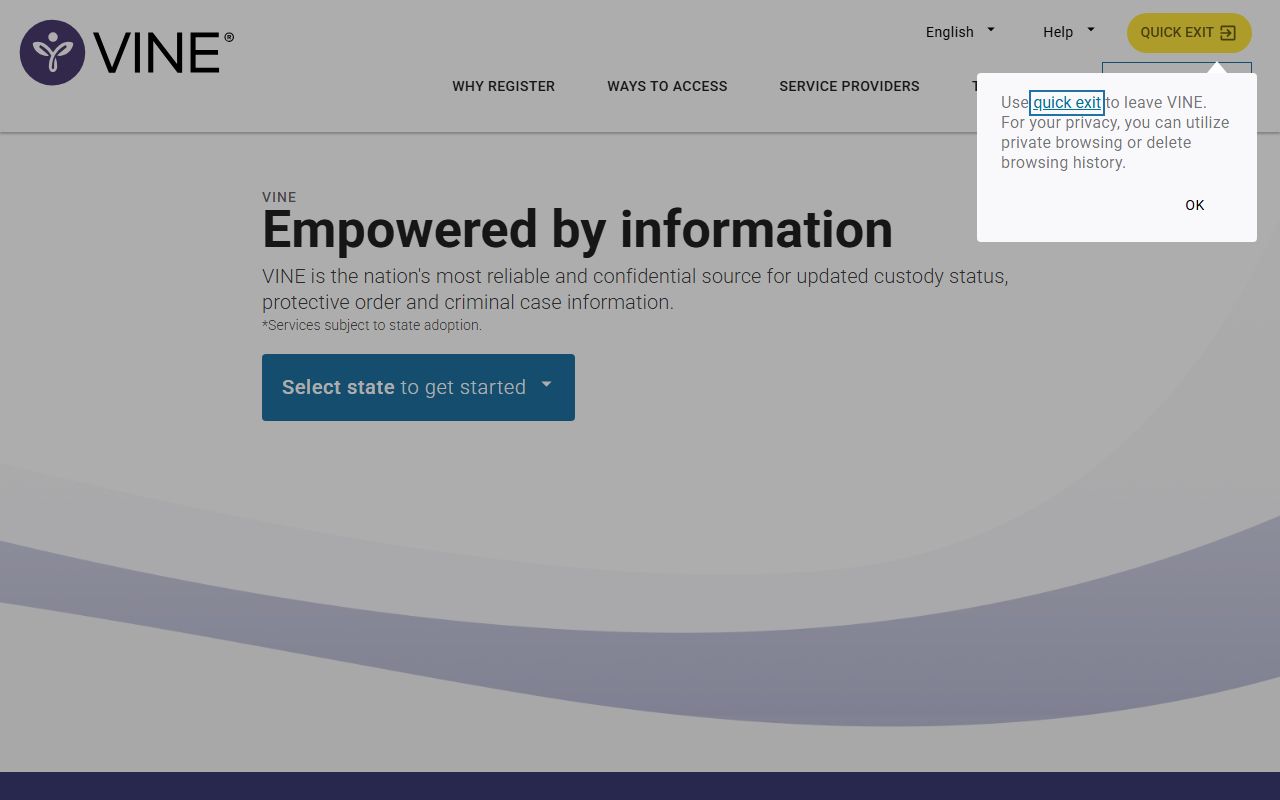
VINELink is designed to be used in real time. The system covers most county jails and state facilities in Tennessee, so a person held at the Rutherford County Adult Detention Center should appear in the directory. Search by the offender's name or ID, confirm the facility, and complete your notification registration. Registration is free and does not require you to explain why you are signing up. If you cannot find the person in the VINELink directory, call (615) 898-7777 to ask whether that facility is connected to the service.
VINELink is not a records search tool. It does not give you a release address or tell you where a person went after leaving. It simply notifies you that a custody change happened. For case and charge details, use the court records search tools described on the Rutherford County arrest records page.
Searching State Prison Releases with TDOC FOIL
If a person was sentenced and sent to a state prison rather than staying at the county jail, the Rutherford County detention center will not have their release record. For state prisoners, use the Tennessee Felony Offender Information Lookup, known as FOIL, which is run by the Tennessee Department of Correction.
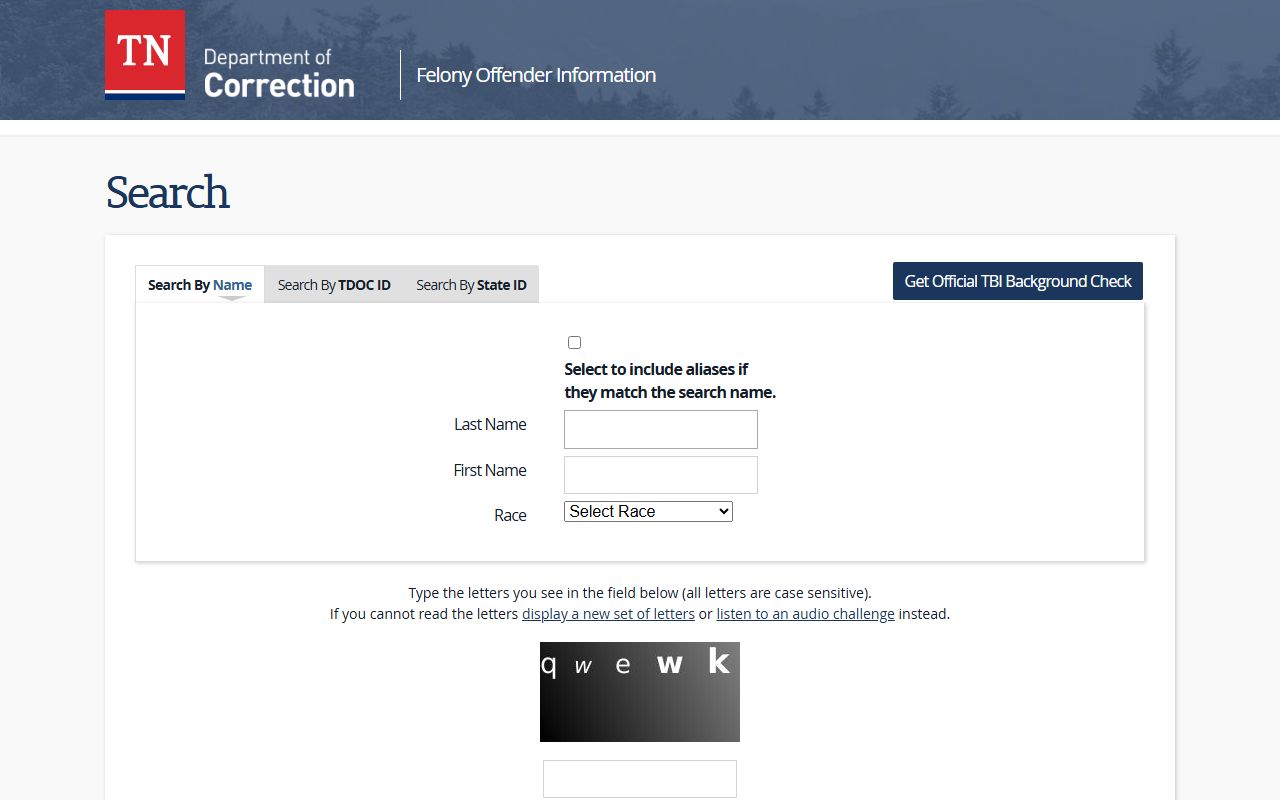
The Tennessee FOIL search portal lets you look up a person by name, TDOC ID, or State ID Number. The search is free, but a captcha step is required before results load. TDOC and the Board of Parole do not warrant the accuracy, timeliness, or completeness of information returned, so treat any result as a starting point and confirm directly with the facility or supervision office if the stakes are high.
The table below shows the search fields available on the FOIL portal:
| Field Label | Type | Required | Notes |
|---|---|---|---|
| Search By Name | Tab | Choose one path | Activates the name-search fields. |
| Search By TDOC ID | Tab | Choose one path | Uses the Tennessee Offender Management Information System ID. |
| Search By State ID | Tab | Choose one path | Uses the State Identification Number (SID). |
| Last Name | Text | Yes (name tab) | Required for name search. |
| First Name | Text | Optional | Narrows name results when provided. |
| Race | Dropdown | Optional | White, Black, Hispanic, Asian, American Indian, Alaskan Native, Pacific Islander. |
| Include Aliases | Checkbox | Optional | Searches name fields against known aliases if checked. |
| TDOC ID | Text | Yes (TDOC tab) | Required when using the TDOC ID path. |
| State ID Number (SID) | Text | Yes (SID tab) | Required when using the State ID path. |
| Captcha | Text | Yes, always | Letters are case sensitive; an audio challenge is available. |
The "Include Aliases" checkbox is worth using when a person goes by more than one name. If an initial search returns no results, try the alias option before concluding the person is not in the system. A misspelled name in the TDOC record can also cause a miss, so try alternate spellings if a first attempt fails. Results that show a current or past facility name give you a starting point for further confirmation by phone.
Searching Federal Releases with the BOP Locator
People convicted of federal crimes serve time in Bureau of Prisons facilities, not county jails. The Rutherford County Sheriff has no record of a federal release because it happened outside their system. For federal cases, use the BOP inmate locator.
The BOP inmate locator at bop.gov covers federal inmates incarcerated from 1982 to the present. Search by number or by name. When searching by number, you can use a BOP Register Number, DCDC Number, FBI Number, or INS Number. Name searches require at least a first and last name. The BOP Register Number format is #####-###.
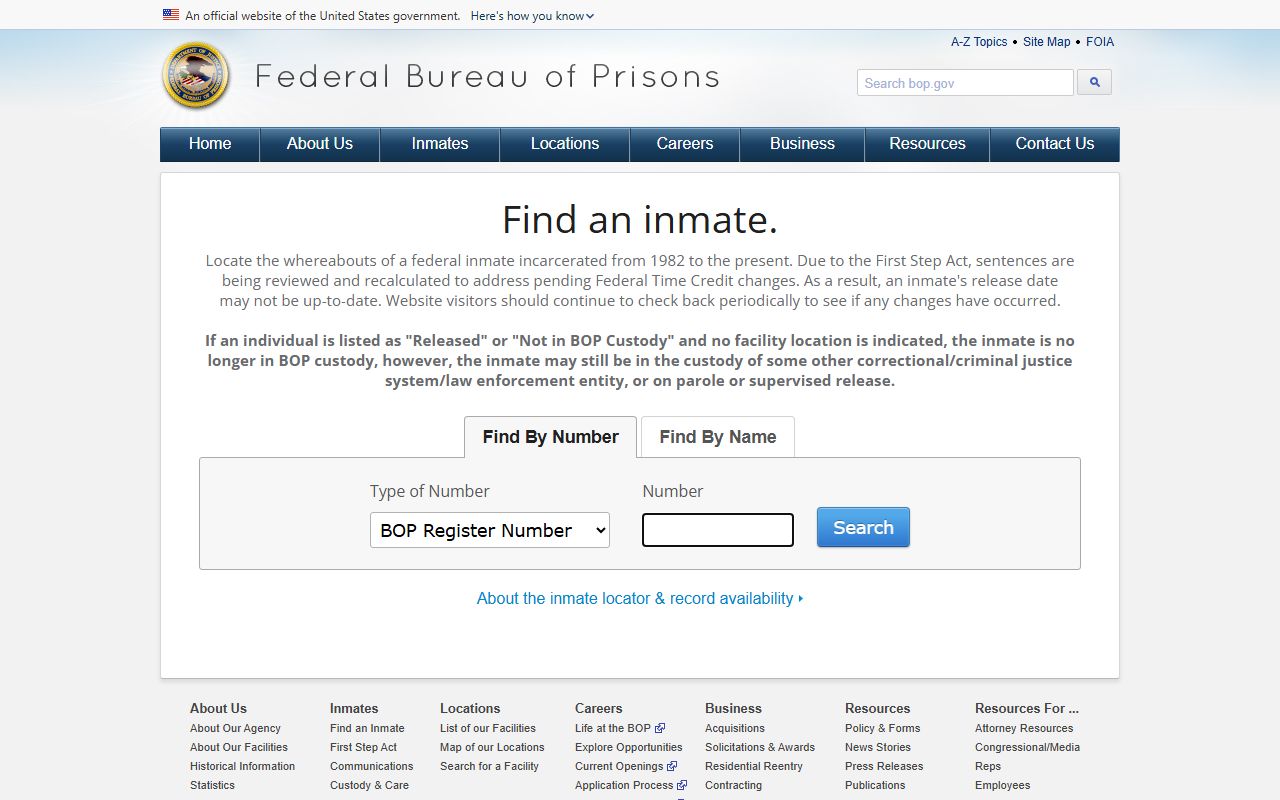
The search fields for the BOP locator are listed below:
| Field Label | Type | Required | Notes |
|---|---|---|---|
| Find By Number | Tab | Choose one path | Activates the number-search fields. |
| Type of Number | Radio/Dropdown | Yes (number tab) | BOP Register Number; DCDC Number; FBI Number; INS Number. |
| Number | Text | Yes (number tab) | BOP Register Number format is #####-###. |
| Find By Name | Tab | Choose one path | Activates the name-search fields. |
| First | Text | Yes (name tab) | Required for name search. |
| Middle | Text | Optional | Middle name or initial. |
| Last | Text | Yes (name tab) | Required for name search. |
| Race | Dropdown/Radio | Optional | American Indian, Asian, Black, White. |
| Age | Text/Number | Optional | Helps narrow results for common names. |
| Sex | Dropdown/Radio | Optional | Male or Female. |
| Search | Button | n/a | Runs the search. |
| Clear Form | Button | n/a | Resets all fields. |
When a result loads, the BOP page shows a sample profile with these fields: Name, Register Number, Age, Race, Sex, Release Date, and Location. The profile panel repeats Age, Race, and Sex as summary labels. If a record shows "Released" or "Not in BOP Custody" with no facility listed, the person has left federal custody but may still be on parole, supervised release, or in another correctional system.
One key point on release dates: because of First Step Act sentence recalculations, a release date shown in the BOP locator may not be current. The BOP itself warns users that release dates may be affected by ongoing recalculations under that law. If the date matters, confirm it directly with the facility or the person's case manager rather than treating the listed date as final. The locator covers federal inmates incarcerated from 1982 forward, so older cases may be searchable even if the person has long since been released.
The Sex Offender Registry After Release
When a person convicted of a qualifying sex offense is released, they must register with the Tennessee Bureau of Investigation sex offender registry under Tenn. Code Ann. sections 40-39-201 et seq. This applies to offenses listed under section 40-39-202. Registration is required regardless of where in the state the person settles after release.
The TBI registry is a public information resource. The TBI sex offender registry landing page is where you start. From there you move to the search portal, where you must accept a disclaimer before results appear.
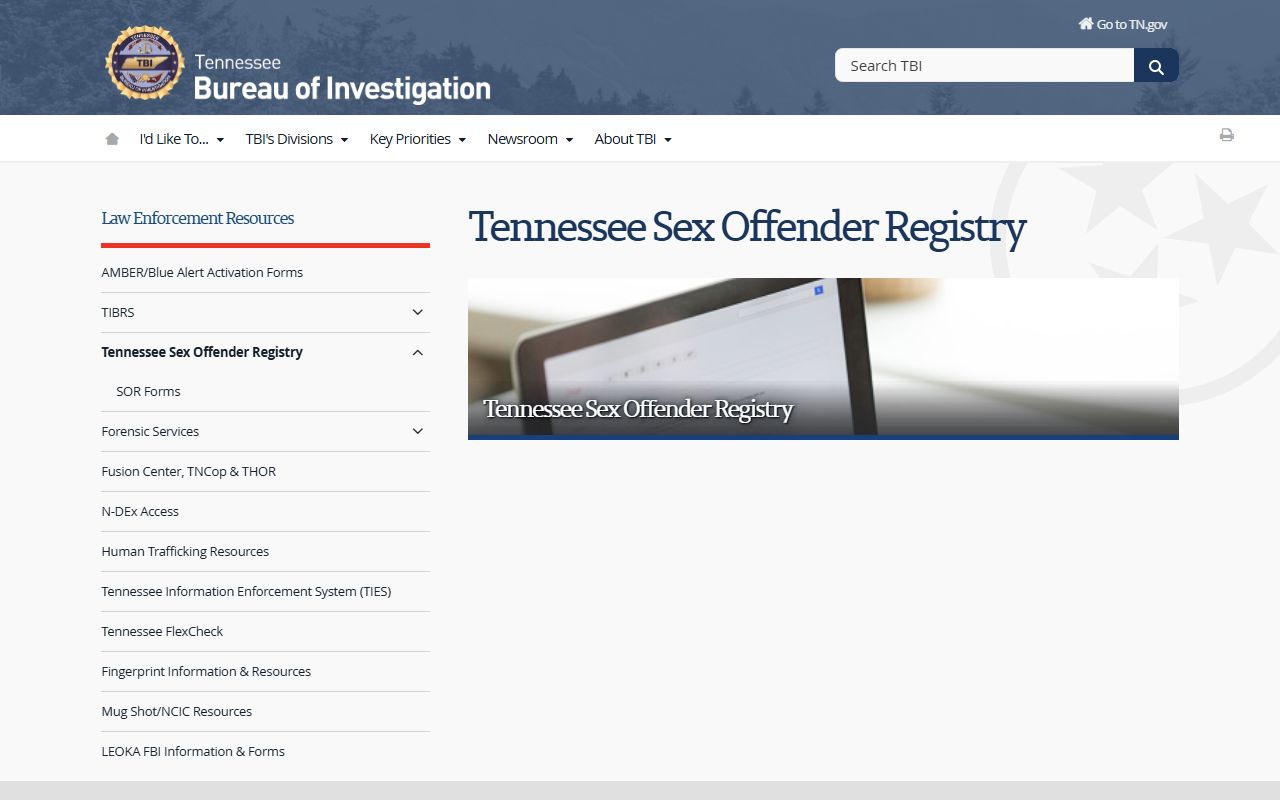
The TBI registry information and FAQ page at sor.tbi.tn.gov/info explains the rules in plain language. Sexual offenders report annually around their birthday. Violent sexual offenders report quarterly in March, June, September, and December. Offenders must report any changes to their required information in person within 48 hours. Social media accounts, email addresses, and other online identifiers must be updated within 72 hours of any change.
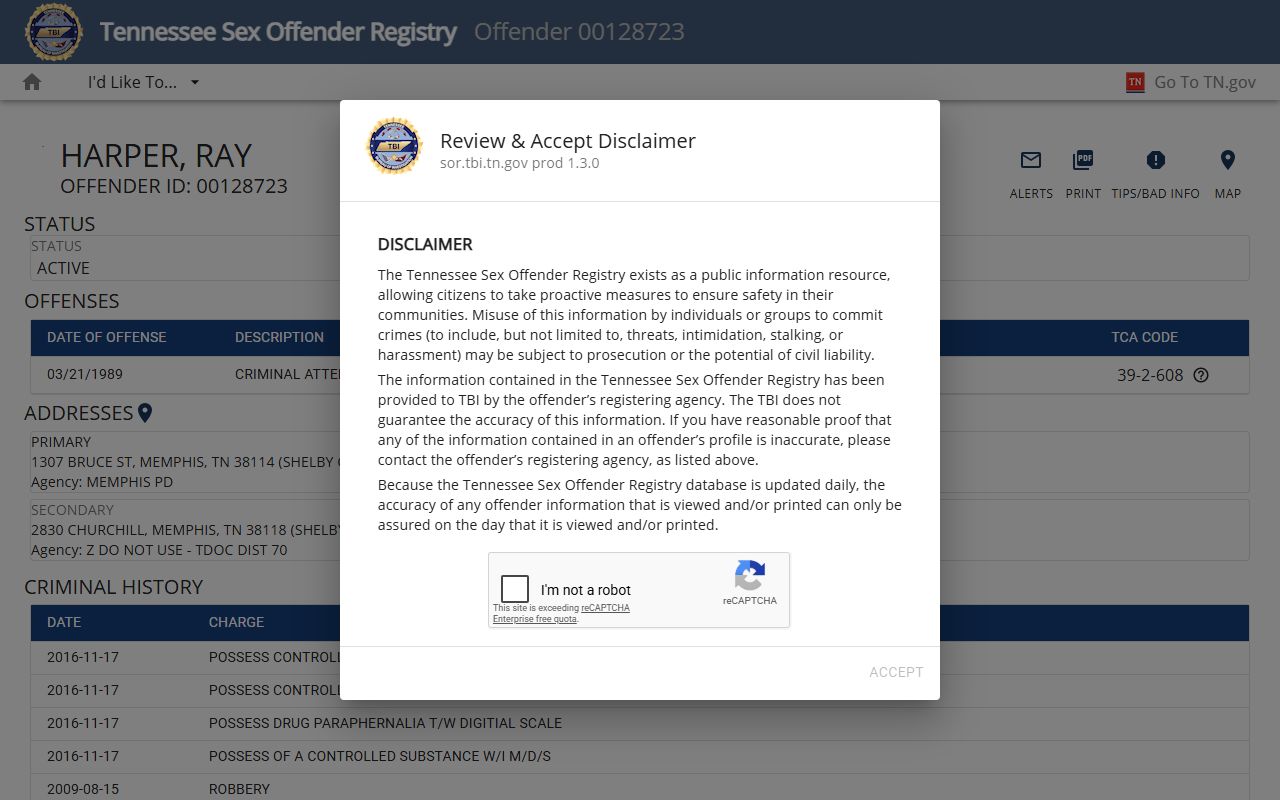
A registered profile on the TBI site typically includes the following fields:
- Offender ID and full name, with known aliases listed.
- Photograph and physical description.
- Address and county of residence.
- Classification as a sexual offender or violent sexual offender.
- Offense and conviction information.
- Registering agency and current reporting status.
- Vehicle, employer, or school details where required to be public under registry rules.
The TBI updates the database daily, but accuracy can only be confirmed on the day a record is viewed or printed. TBI does not guarantee accuracy, and information is supplied by the registering agency. Misuse of registry information to commit threats, harassment, stalking, or intimidation may lead to criminal prosecution or civil liability. For registry questions, contact TBI at 1-888-837-4170 or by email at tbisormgr@tbi.tn.gov.
An example TBI registry detail record shows the format a typical profile uses when you search and open an individual record from the results list.
Violent juvenile sex offenders are not included on the public registry website. If you have concerns about a specific case and cannot find a record, contact TBI directly or speak with an attorney about what records may be sealed or restricted under Tennessee law.
Commissary Balances After Release
The Adult Detention Center holds commissary accounts for inmates during their stay. When a person is released, any money left in that account does not go away automatically. Rutherford County gives former inmates one year to claim those funds.
After release, remaining commissary balances are converted to a check or debit card and placed in the Visitation Lobby at the detention center at 940 New Salem Highway, Murfreesboro. The released person must come to that lobby and pick up the funds. The window for doing so is one year from the date of release. After that year, unclaimed balances go to the State's unclaimed funds account under Tennessee law.
Pending commissary orders work on a shorter timeline. If a release happens while a commissary order is still in process, the released person has five business days to pick up the items in the Visitation Lobby. After five business days, those items are donated. There is no extension on this window, so act quickly if a pending order was in the system at the time of release.
Commissary questions: Call 1-855-589-7687 for help with commissary account balances, pending orders, or pickup procedures after release from the Rutherford County Adult Detention Center.
These rules apply specifically to the Rutherford County Adult Detention Center. If a person was transferred to a state or federal facility before release, the commissary rules and timelines for that other facility will differ. In that case, contact the releasing facility directly for their procedures.
Reentry Resources in Rutherford County
Getting out of jail or prison is one step. Getting stable housing, work, and support is the harder part. Rutherford County has programs and services focused on that transition, and state resources fill gaps where local programs do not reach.
Rutherford County's Recovery Court system includes a Re-Entry Program listed in the county's official navigation. The program connects people leaving incarceration with services aimed at reducing the chance they return to custody. A 2026 Tennessee reentry study noted that the Rutherford County Reentry Program receives state grant funding and has worked in partnership with Belmont University. Exact enrollment steps and current service offerings are best confirmed by contacting the program directly through Rutherford County Government.
The Legal Aid Society of Middle Tennessee and the Cumberlands provides civil legal help for issues that come up often in reentry. Legal Aid handles housing disputes, benefits denials, family law questions, consumer debt, and other civil matters that can block a person from getting stable after release. Services are free to those who qualify financially. Apply online or call through laet.org to find out whether you are eligible and what types of cases the office takes in Middle Tennessee.
The Rutherford and Cannon County Bar Association runs a free legal clinic each Thursday from 3:30 p.m. to 5:00 p.m. at Greenhouse Ministries, 309 South Spring Street, Murfreesboro, TN 37130. Walk-in help is available for basic legal questions, which can be useful when a reentry issue involves a court matter or a document that needs review. No appointment is required.
For a broader look at who is currently held in the facility and what programs are offered inside the detention center, see Rutherford County inmate records and the jail population page. Both pages cover the facility's structure and programming in more detail.
Parole, Probation, and Civil Rights Restoration
Release from custody does not always mean the case is finished. Many people leave jail or prison on probation, parole, or supervised release. Conditions remain in place and a supervision officer must be contacted on a set schedule. A violation of those conditions can mean a return to custody.
State probation and parole in Tennessee are managed by the Tennessee Department of Correction. For local supervision questions, the probation line listed in Rutherford County's official contacts is (615) 849-5720. Federal supervised release is managed by U.S. Probation and Pretrial Services for the Middle District of Tennessee.
Civil rights affected by a Tennessee felony conviction may be restorable after completing a sentence. Voting rights and the right to hold public office can be reinstated through a certificate-of-restoration process administered by the Tennessee Secretary of State's Division of Elections and the Department of Correction. Eligibility depends on the offense and whether all terms of the sentence, including any restitution, have been completed. Speak with an attorney or contact the Tennessee Secretary of State's office for current requirements.
For case documents tied to the underlying conviction, use the arrest records and warrant records pages. Both cover how to search court records tied to a criminal case in Rutherford County.
Jennings H. Jones, District Attorney General
320 West Main Street, Suite 100
Murfreesboro, TN 37130
(615) 898-8008
Fax: (615) 898-8039
tennesseeda.gov/district-16
The District Attorney's office handles state criminal prosecution for Rutherford and Cannon Counties in the 16th Judicial District. Jennings H. Jones has served as District Attorney General since 2014. The Public Defender's office, which handles indigent criminal defense in the same district, is led by Gerald L. Melton and is located at 118 North Church Street, Elrod Building, Murfreesboro, TN 37130, phone (615) 898-8020. A defendant who needs public defender representation must inform the judge at arraignment that they cannot afford private counsel.